If you’ve been tempted to use your eyewash solution as your contact lens solution, or think you ever might be, this post is for you.
Maybe you forgot to restock, or you’re on the road and forgot to bring your lens solutions. Whatever the reason, stop. Don’t do it. There’s a good reason why, and much more to learn.
Let’s explore this further so you can fully understand the answer and possibly prevent costly mistakes that can impact your vision now or in the future.
Eye wash is a simple saline solution formulated to rinse dust, dirt, pollen, and other foreign particles from your eyes. These sterile solutions are used as eye drops to clean your lenses while you wear them. You might even feel some relief when you use one.
While the eye wash solution is mild and usually safe, it is designed for temporary contact only. It does not provide the needed disinfection and lubrication that your lenses require while soaking or storing. In the same way, these solutions are not designed for prolonged contact with your lenses.
Popular Eye Wash Solutions
There are numerous types of eye wash solutions, including saline solution, specialized buffered solution, and eyelid cleanser. These solutions all have specific uses. A saline solution is for general rinsing. For chemical splashes, use a buffered solution. And for daily eye hygiene, use an eyelid cleanser.
To give you a clearer picture of eye wash solutions, here are some popular and widely available products.
Saline Solutions
These are the most common eye wash solutions available. They’re good for flushing out dust, pollen, and minor irritants.
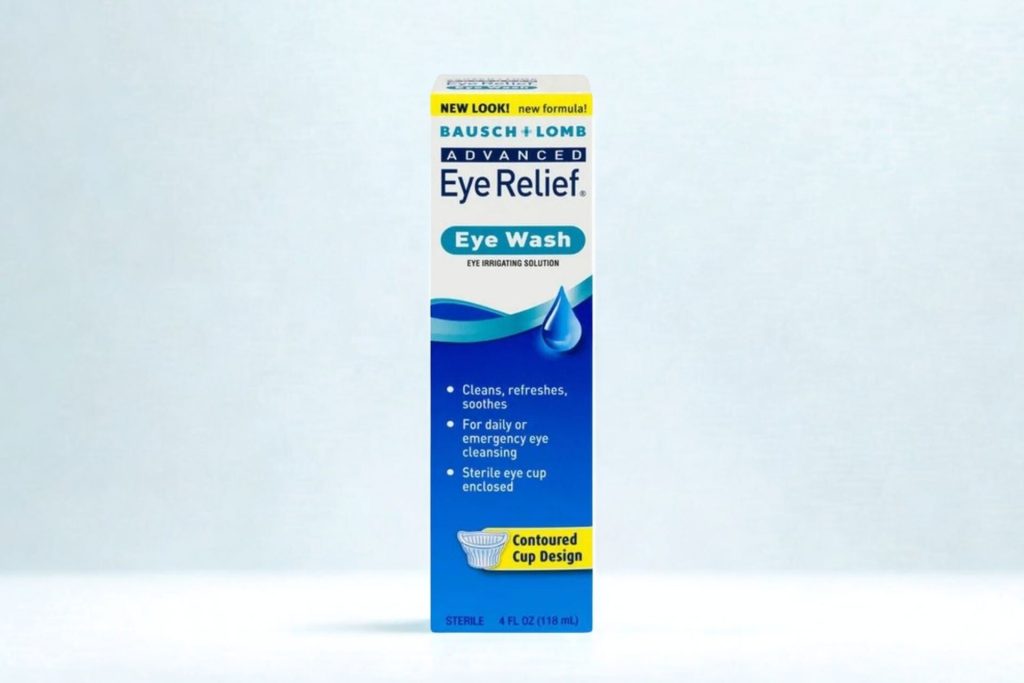
Advanced Eye Relief® Eye Wash by Bausch + Lomb is an eye irrigating eye wash solution made from 99.05% purified water. It is designed to remove foreign materials and other pollutants from your eyes. It can also relieve itching and discomfort caused by irritants.
The solution comes with a specially contoured cup, which you can use if you don’t like using the solution straight from the dropper bottle.
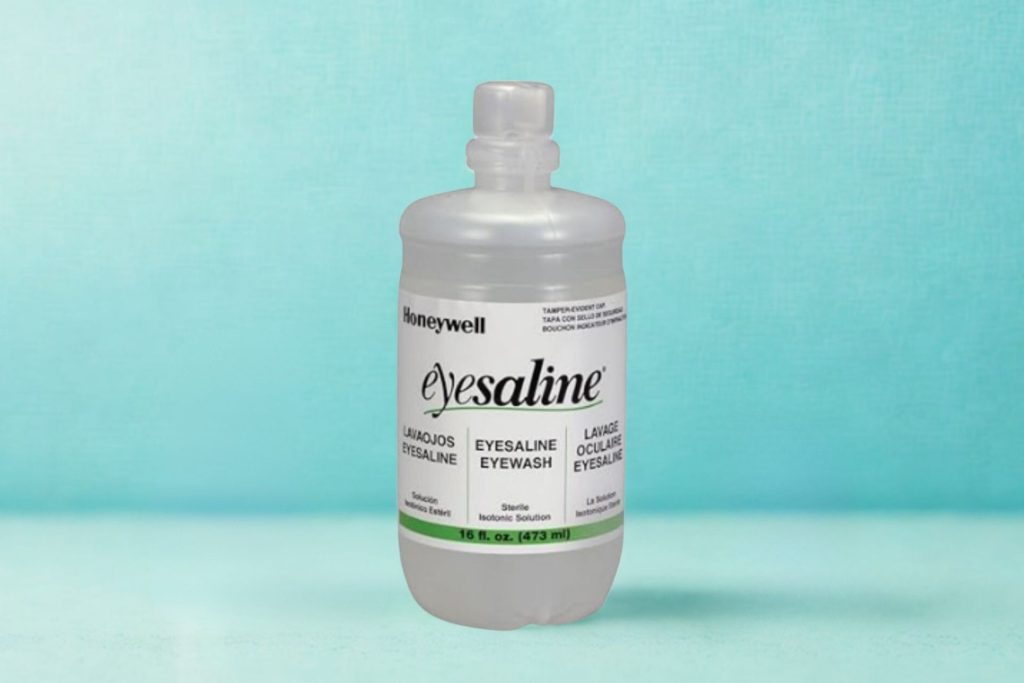
Honeywell Eyesaline Eyewash Solution
Honeywell Eyesaline Eyewash Solution
Eyesaline is a well-known eye wash brand from Honeywell. It is designed for emergency removal of dust, pollen, and other irritants from your eyes. You can get this in portable bottles or as a concentrated version for eyewash stations.
Buffered Solutions
If you need an eye wash solution for accidental acid splashes, try a specialized buffered solution. This works better than saline eye wash solutions in neutralizing the acid and giving some relief.
Cederroth Eye Wash
This is one of the better-known specialized buffered eye wash solutions for chemical irritants. Cederroth Eye Wash is a borate-buffered isotonic sodium chloride solution. It is designed to bring the pH level of your eyes back to their natural state, countering the acidic contaminants.
Eyelid & Lash Cleansers
If you’ve got dry eyes and an eye condition like blepharitis (inflamed eyelids) or a stye, use an eyelid and lash eye wash for your daily eye hygiene. These solutions contain hypochlorous acid, which strips off bacteria, oil, and debris.
Pure & Clean Eye Wash
Pure & Clean Eye Wash is an FDA-approved daily lid cleanser that’s safe for sensitive eyes and can be used while wearing your contacts. It’s available as a spray or as a hydrogel that’s applied to your closed eyes with a swab or pad.
Single-Use Pods/Vials
Eye wash solutions in single-use pods or vials are designed for emergency use. You can make this a part of your first-aid kit.
HypaClens
HypaClens eye wash is a sterile 0.9% saline solution designed as emergency irrigation for eyes contaminated with particles, dust, smoke, or liquids. It is intended to replace running water if you need to flush away contaminants from your eyes immediately.
EyS
EyS eye wash is a sterile, buffered isotonic saline solution with Purified Water USP 98.4% as its active ingredient. You get general eye cleansing and immediate relief from irritation caused by foreign materials like dust, pollen, or chemicals.
What Is Contact Lens Solution?
Contact lens solutions are made for soaking and storing contact lenses. They’re specially formulated to serve these more complex roles for maintaining contacts.
They rinse and clean your contacts, keeping them moist until you wear them again. More importantly, they disinfect your lenses while you store them. To do this, they include several ingredients:
Cleaning Agents: These ingredients specifically clean off debris, protein deposits, and lipid films. They do this effectively when they soak your lenses.
Disinfecting Agents: Contact lens solutions contain agents that kill bacteria, viruses, fungi, and other microorganisms that contaminate your lenses.
Lubricating Agents: These solutions can soak lenses for a long time because they contain moist, gentle lubricating agents that keep lenses from drying up.
Buffering Agents: These agents maintain the whole solution’s pH balance. It is formulated to be compatible with your eye’s pH level.
Tonicity Agents: These agents ensure the solution has the correct osmotic pressure to match your eye’s environment. This means that while you wear the lenses, they don’t draw out moisture nor prevent moisture from seeping through them.
The combination of these agents or ingredients is specific to your lens type. They only differ by brand formulation. Some brands might include more lubricating agents and advertise that they’re extra-lubricating. Some brands may say they have super disinfecting power because they formulated more disinfecting agents, and so on.
Popular Contact Lens Solutions
Contact lens solutions are widely available. Here are a couple of popular contact lens solutions to try out.
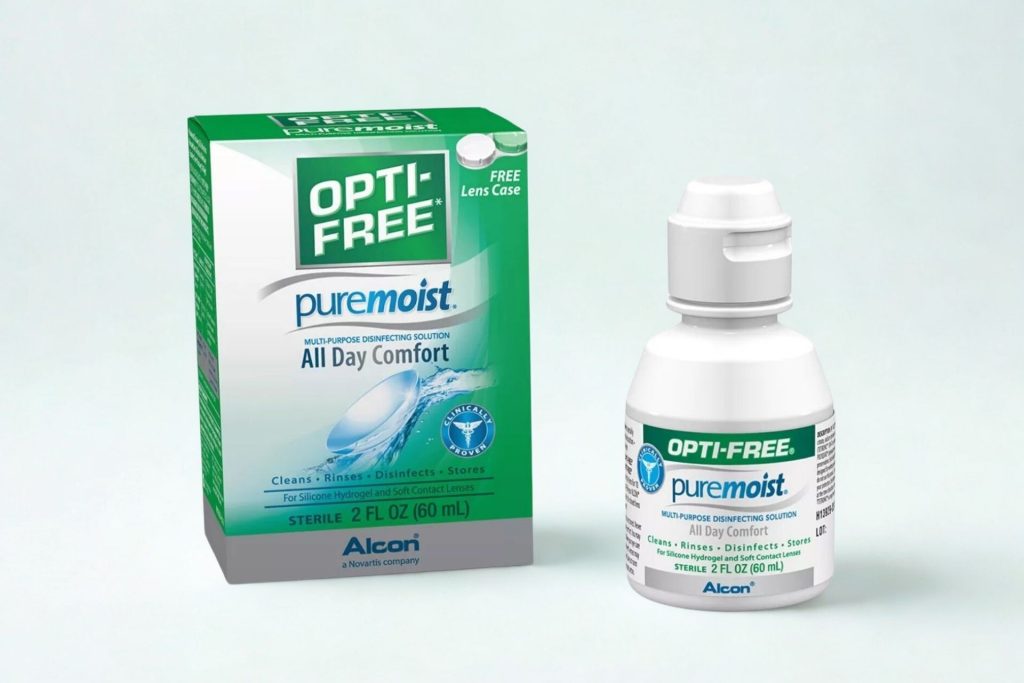
Opti-Free Puremoist Multi-Purpose Disinfecting Solution is by Alcon, and it’s one of the more popular contact solutions available on the market. It is a multi-purpose solution designed for rinsing, cleaning, disinfecting, soaking, and storing.
It is also formulated to recondition your lenses to make sure they remain soft and comfortable when reworn. This particular product from Alcon works great with silicone hydrogel and soft contact lenses.
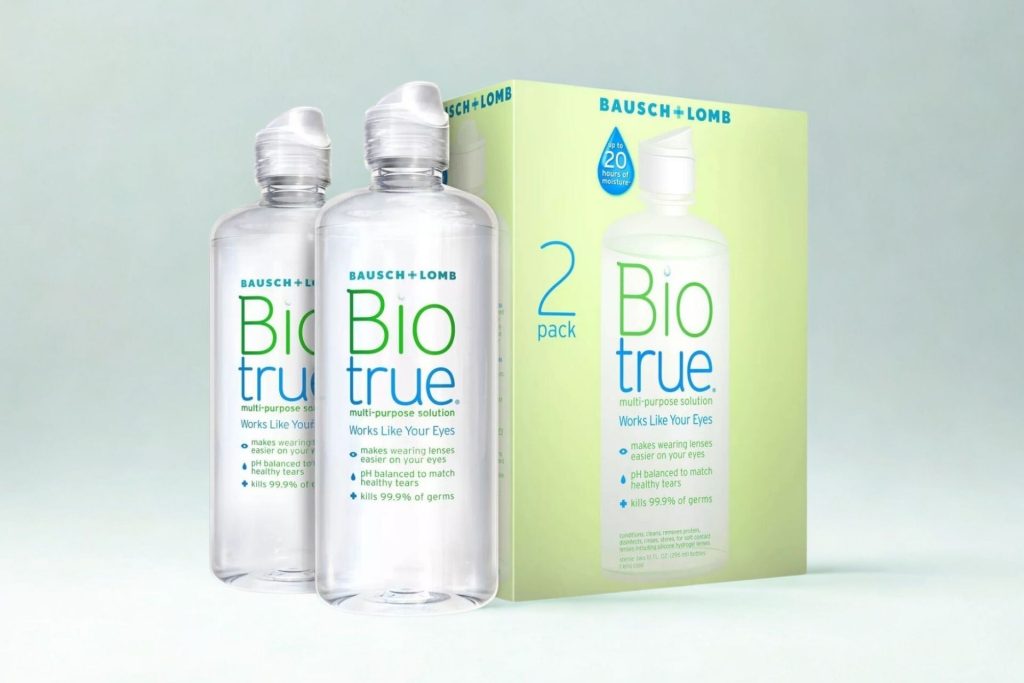
Bausch & Lomb Biotrue® Multi‐Purpose Solution
Bausch & Lomb Biotrue Multi-Purpose Solution
Biotrue® Multi-Purpose Solution is a contact solution from Bausch + Lomb that’s specially formulated with hyaluronan (HA), which is an element found naturally in tears.
Aside from cleaning and disinfecting your lenses, this contact solution is pH-balanced and designed to make sure your contacts stay hydrated while you wear them. The solution provides approximately 20 hours of hydration, according to one study.
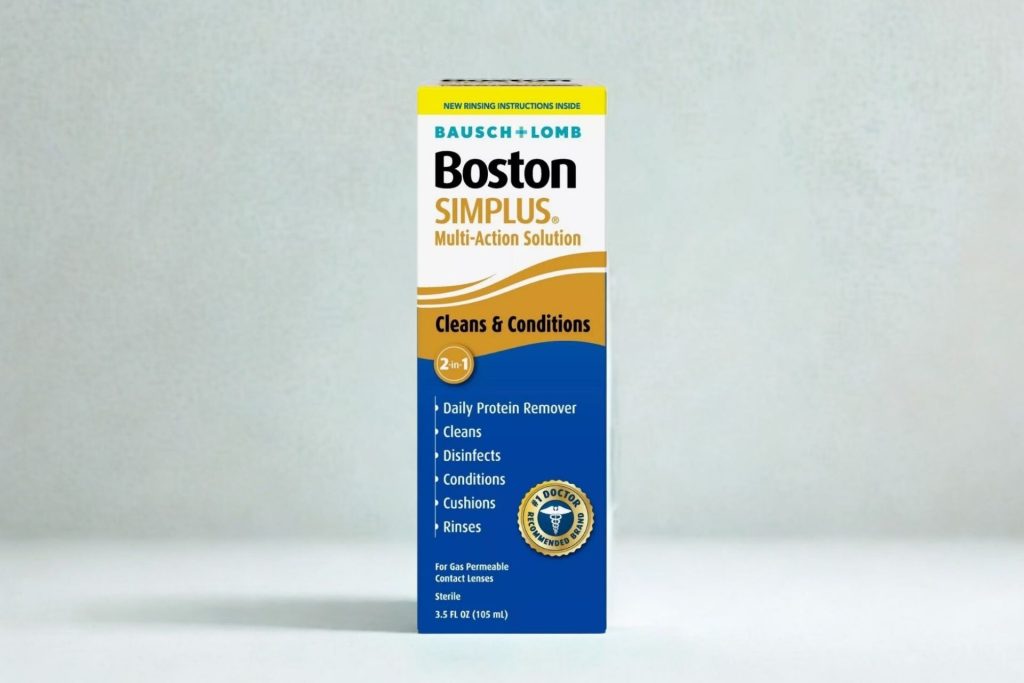
Bausch & Lomb Boston® SIMPLUS Multi-Action Solution is Bausch + Lomb’s specialized cleaning solution for rigid gas permeable (RGP) contacts. This is strictly for RGP lenses, and it is formulated to remove protein build-up while conditioning the lenses for moisture retention.
Acuvue RevitaLens
Acuvue RevitaLens Multi-Purpose Disinfecting Solution is a popular all-in-one disinfecting solution for cleaning, disinfecting, and soaking soft contact lenses. It boasts of a dual disinfecting technology, with Alexidine and Polyquaternium-1 as disinfecting agents. It kills more than 99.9% of germs and bacteria on your lenses. It is also very effective against Acanthamoeba, a genus of amoebae found in soil, fresh water, and other habitats.
Renu Fresh
Renu Fresh is another widely available disinfecting solution by Bausch + Lomb. It has a special ingredient called Hydranate, which removes protein deposits from lenses. It is also formulated with Poloxamine, which conditions the lenses to ensure all-day lens moisture. It is multi-purpose (cleaning, disinfecting, and soaking).
Clear Care Plus (Hydrogen Peroxide)
Clear Care Plus is by Alcon and is formulated as a deep cleaning lens solution. It is hydrogen peroxide-based, and it can remove proteins, germs, and other deposits from soft contact lenses. It also features HydraGlyde Moisture Matrix, which is designed to give soft lenses (including silicone hydrogel lenses) all-day moisture.
Note: You need to soak your lenses for at least six hours to enjoy maximum benefits.
Why You Shouldn’t Use Eye Wash as Contact Lens Solution
Closeup of a Red, Irritated Eye
Using eye wash as a contact lens solution carries risks, and some are more significant than others:
Lens Damage: Since eye wash solutions aren’t made to soak and store contact lenses, they may not be compatible with your lens material. This can lead to changing the shape and damaging your lenses.
Discomfort: The lack of lubrication from eye wash solutions can make your contacts uncomfortable as the lenses become dry and gritty.
Corneal Damage: Eye wash solutions do not lubricate the lenses. They’re not formulated to do that. When you wear inadequately lubricated lenses, you risk friction and irritation on the cornea. This can lead to more serious concerns, such as corneal cuts, ulcers, and further damage.
Infection: Eye wash solutions are formulated to remove dirt and debris from your lenses as you wear them and temporarily relieve irritation. They are not formulated to kill the microorganisms that have accumulated on your lenses.
If you wear contact lenses contaminated by these bacteria, viruses, and fungi, you introduce them to your cornea. This can lead to serious infections and keratitis (inflammation of the cornea).
These risks are not theoretical. Several studies have highlighted the importance of proper contact lens hygiene, which includes using the right solutions. Findings show that improper contact lens hygiene practices, such as using water and incorrect solutions to store lenses, increase the risk of microbial keratitis, which can lead to blindness.
You Also Shouldn’t Use Contact Lens Solution as an Eye Wash Solution
The other way around is also not a good idea. In case you find yourself needing to clean and lubricate your eyes and your contact solution is close by, resist the temptation!
In the same way that eye wash solutions are not formulated for soaking and cleaning lenses, contact solutions are not made for direct contact with your eyes. These solutions contain disinfecting and preserving agents that may irritate or even damage your eyes.
Also, remember that contact solutions have a saline base. This is not ideal for lubrication. You soothe and add moisture to your eyes when you use an eye wash solution. You’re not going to get the same from a contact solution.
Is Water a Safe Alternative to Contact Lens Solution?
When you wear contact lenses, you should never expose them to water. Even if you’re taking a quick dip in a pool or soaking in a tub, you need to remove your lenses.
First, water contains harmful bacteria. Plus, when contact lenses absorb water, they swell. When they swell, they don’t fit correctly, exposing the cornea to abrasions, which can lead to infection.
Is There a Temporary Alternative to Contact Lens Solution?
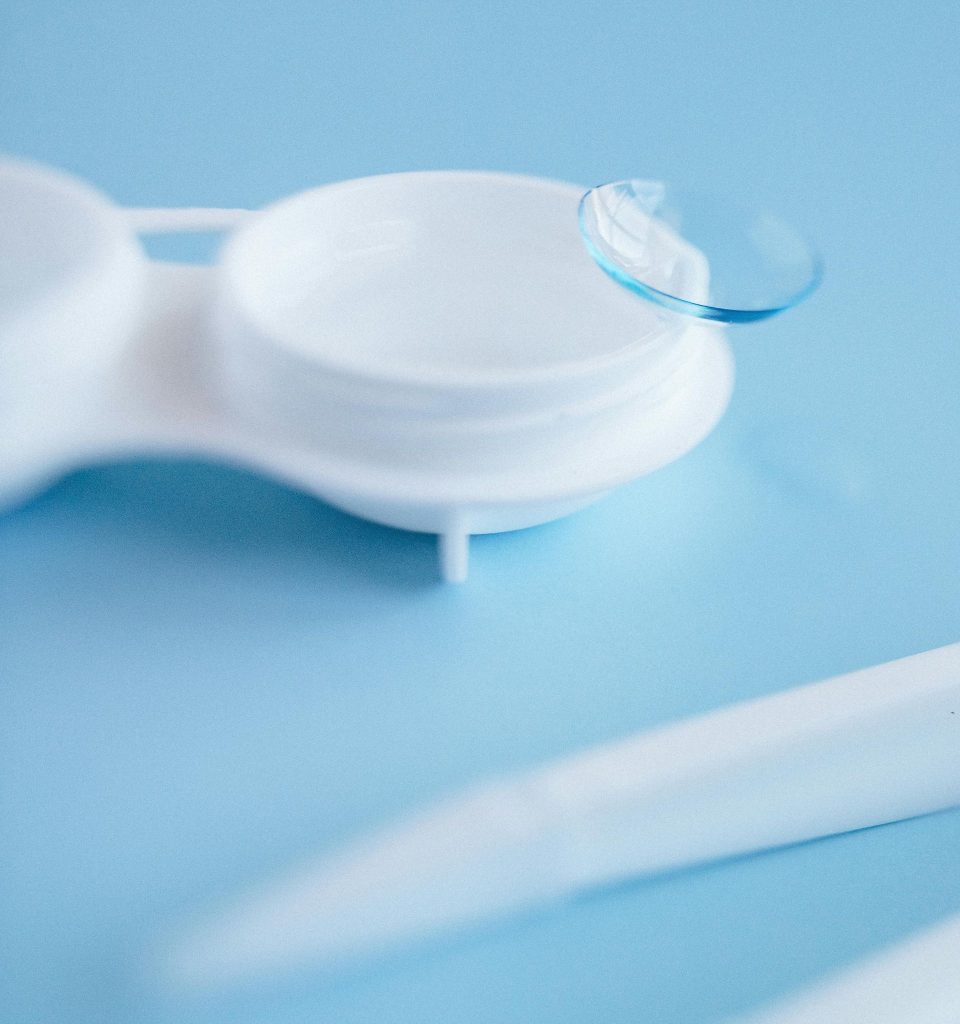
Contact, Case, and Lens Tweezers
Short answer? No. If you search online, you’ll likely find recipes for homemade saline solution. The result is advertised as an emergency saline solution for lens cleaning and storage.
While trying one of these out may be tempting, please don’t. They do not provide the necessary ingredients to store your lenses properly, and you will only expose yourself to the risks I’ve already mentioned.
If you don’t have access to contact lens solutions, the best option is to throw out your lenses and use new ones when you can, or rely on your old go-to glasses in the meantime.
Actual User Experiences
Don’t just take my word for it. I headed to Reddit to see what the community has experienced when it comes to eye wash solutions and contact solutions.
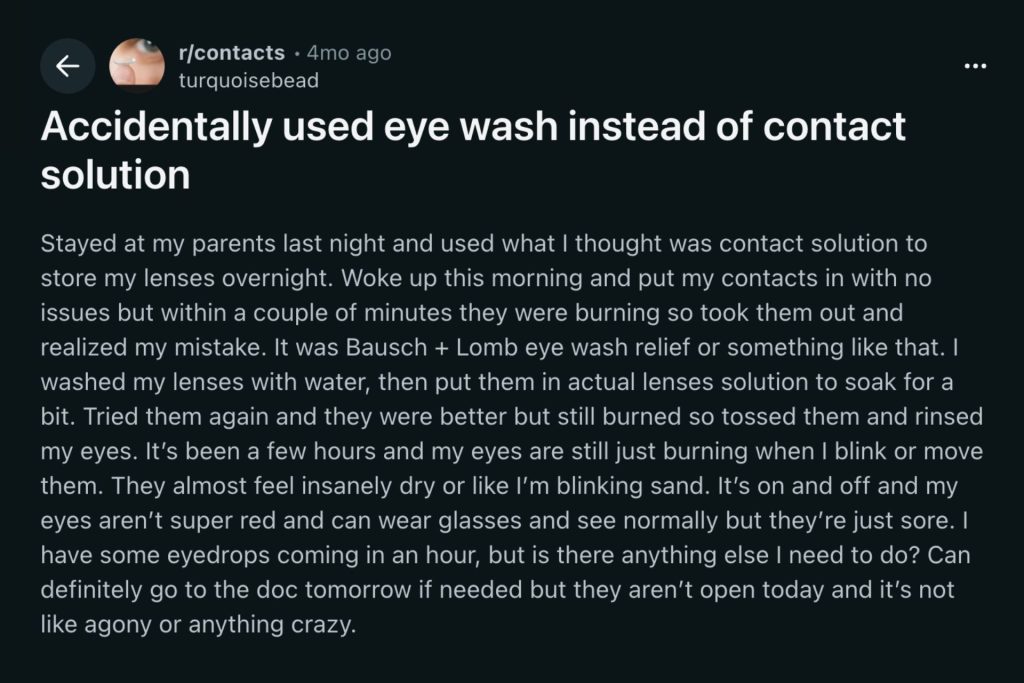
A thread by torquoisebead confirms that it’s a bad idea. She accidentally used eye wash instead of contact solution. She shared:
“Stayed at my parents last night and used what I thought was contact solution to store my lenses overnight. Woke up this morning and put my contacts in with no issues but within a couple of minutes they were burning so took them out and realized my mistake. It was Bausch + Lomb eye wash relief or something like that. I washed my lenses with water, then put them in actual lenses solution to soak for a bit. Tried them again and they were better but still burned so tossed them and rinsed my eyes. It’s been a few hours and my eyes are still just burning when I blink or move them. They almost feel insanely dry or like I’m blinking sand. It’s on and off and my eyes aren’t super red and can wear glasses and see normally but they’re just sore. I have some eyedrops coming in an hour, but is there anything else I need to do? Can definitely go to the doc tomorrow if needed but they aren’t open today and it’s not like agony or anything crazy.”
We can see that she made several lens care mistakes. Using her eye wash to soak her lenses overnight immediately caused burning when she wore them in the morning. She then proceeded to take them off and wash the lenses with water.
Oh my! One mistake snowballed into red, irritated eyes that lasted days!
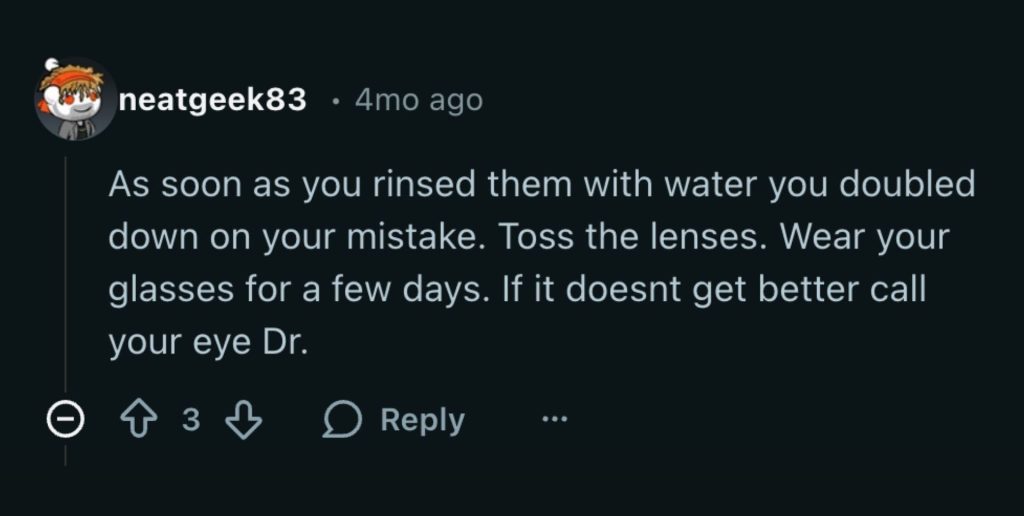
User neatgeek83 also recognized the mistakes. He said:
“As soon as you rinsed them with water you doubled down on your mistake. Toss the lenses. Wear your glasses for a few days. If it doesn’t get better call your eye Dr.”
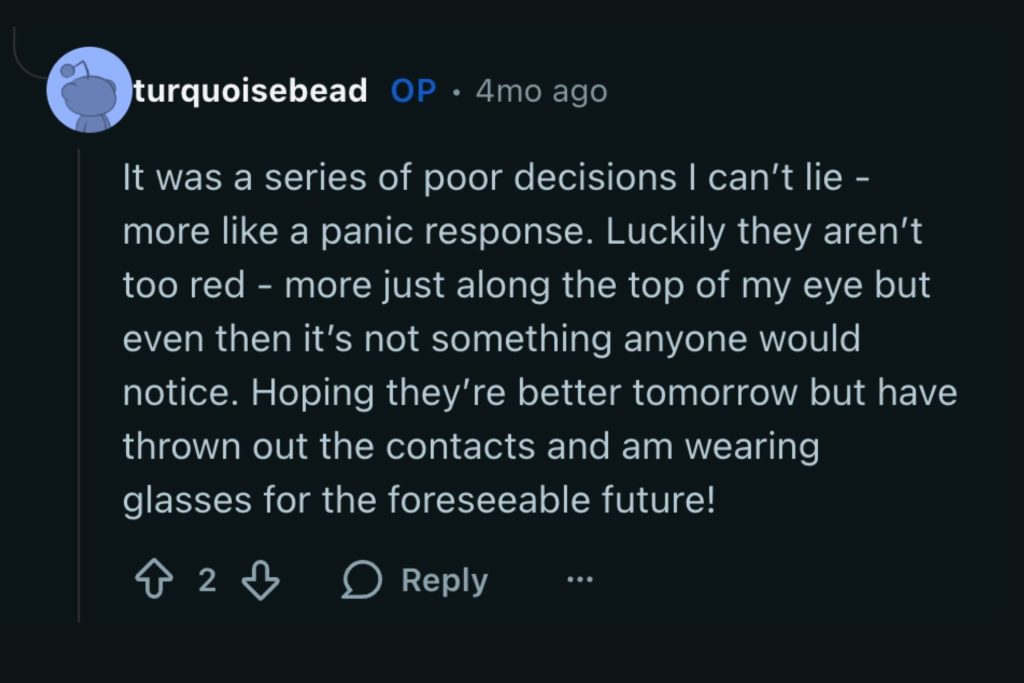
Torquoisebead confirmed she’d thrown out the lenses. She said:
“It was a series of poor decisions I can’t lie – more like a panic response. Luckily they aren’t too red – more just along the top of my eye but even then it’s not something anyone would notice. Hoping they’re better tomorrow but have thrown out the contacts and am wearing glasses for the foreseeable future!“
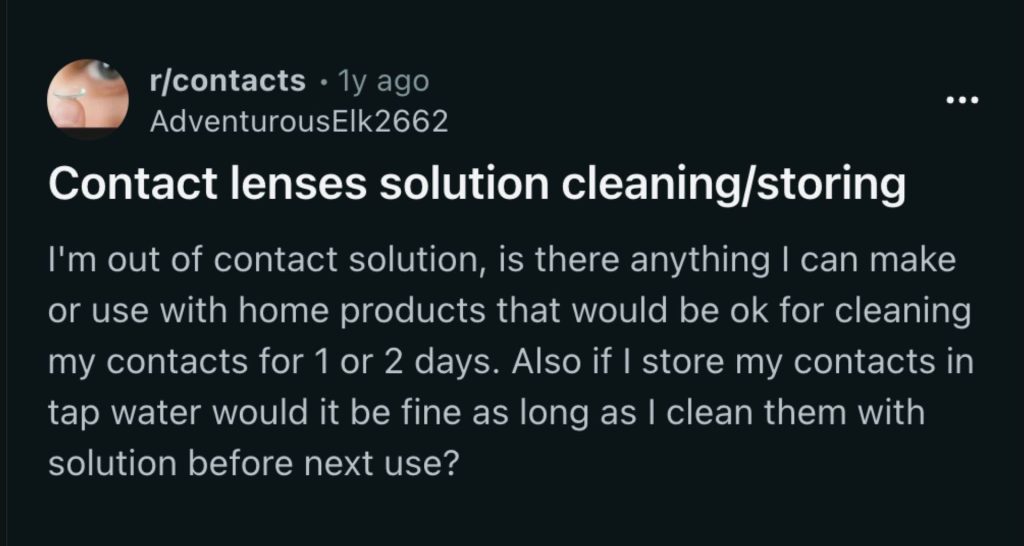
AdventurousElk2662 was in a similar situation. She wrote:
“I’m out of contact solution, is there anything I can make or use with home products that would be ok for cleaning my contacts for 1 or 2 days. Also if I store my contacts in tap water would it be fine as long as I clean them with solution before next use?”
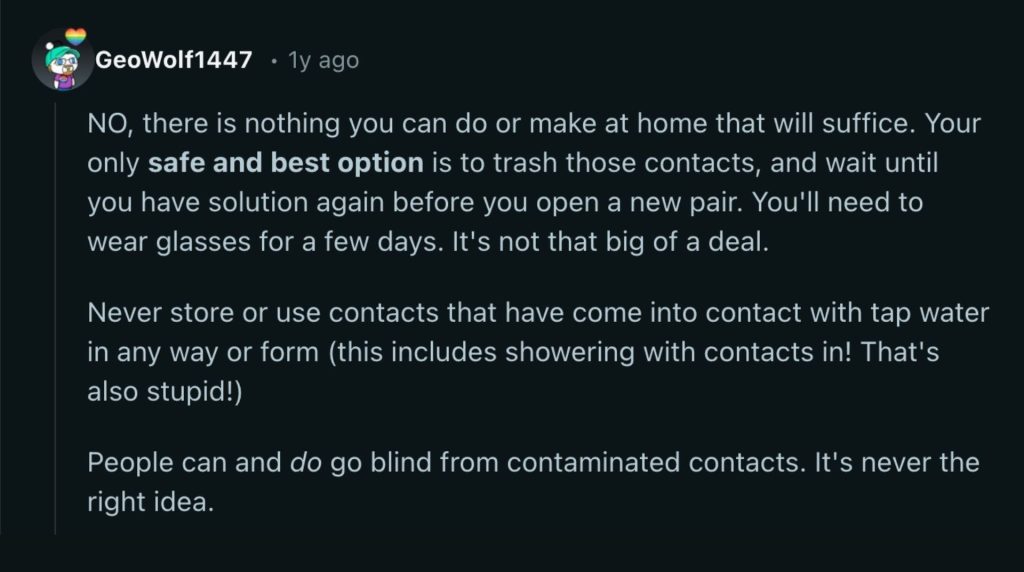
It’s a good thing GeoWolf1447 was quick with his terse advice:
“NO, there is nothing you can do or make at home that will suffice. Your only safe and best option is to trash those contacts, and wait until you have solution again before you open a new pair. You’ll need to wear glasses for a few days. It’s not that big of a deal.
Never store or use contacts that have come into contact with tap water in any way or form (this includes showering with contacts in! That’s also stupid!)
People can and do go blind from contaminated contacts. It’s never the right idea.”
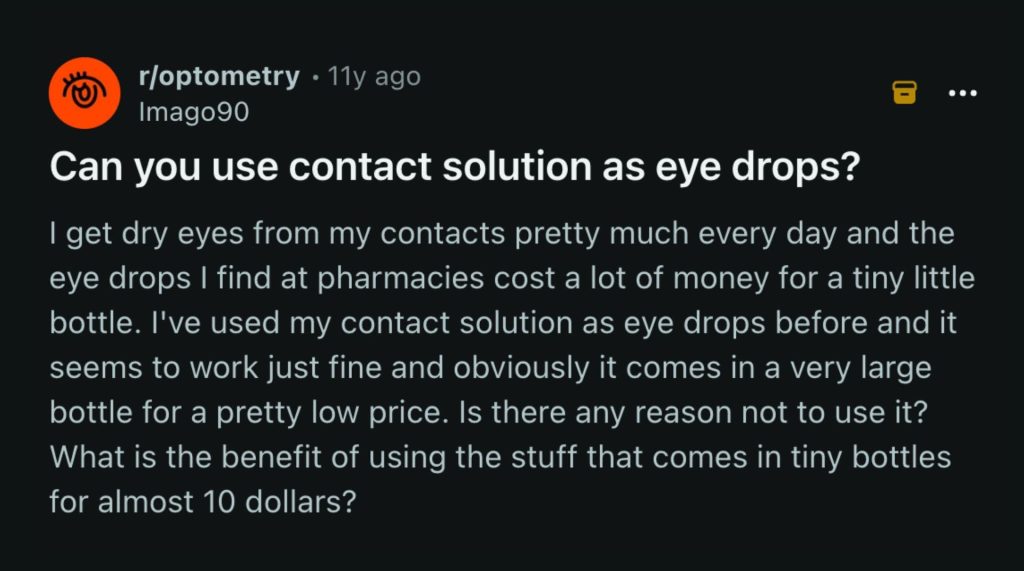
“Can you use contact solution as eye drops? I get dry eyes from my contacts pretty much every day and the eye drops I find at pharmacies cost a lot of money for a tiny little bottle. I’ve used my contact solution as eye drops before and it seems to work just fine and obviously it comes in a very large bottle for a pretty low price. Is there any reason not to use it? What is the benefit of using the stuff that comes in tiny bottles for almost 10 dollars?”
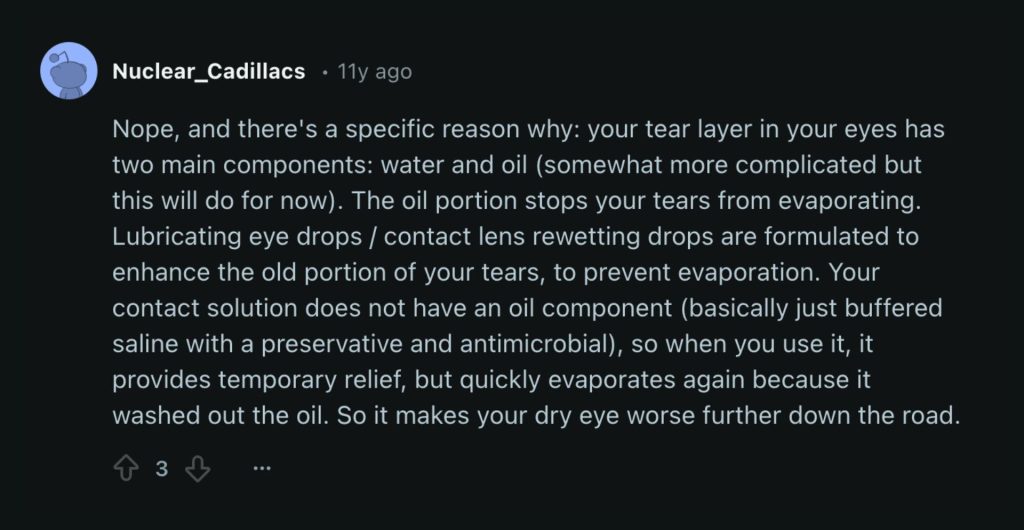
User Nuclear_Cadillacs gave a precise reply:
“Nope, and there’s a specific reason why: your tear layer in your eyes has two main components: water and oil (somewhat more complicated but this will do for now). The oil portion stops your tears from evaporating. Lubricating eye drops / contact lens rewetting drops are formulated to enhance the old portion of your tears, to prevent evaporation. Your contact solution does not have an oil component (basically just buffered saline with a preservative and antimicrobial), so when you use it, it provides temporary relief, but quickly evaporates again because it washed out the oil. So it makes your dry eye worse further down the road.”
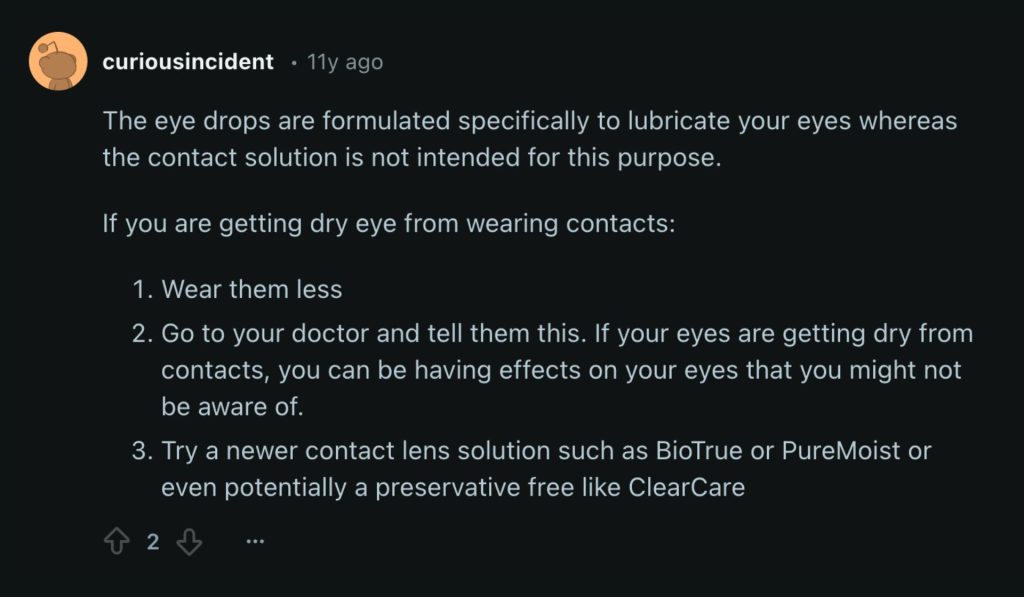
This was followed by great advice from user curiousincident. He shared:
“The eye drops are formulated specifically to lubricate your eyes whereas the contact solution is not intended for this purpose.
If you are getting dry eye from wearing contacts:
1. Wear them less
2. Go to your doctor and tell them this. If your eyes are getting dry from contacts, you can be having effects on your eyes that you might not be aware of.
Try a newer contact lens solution such as BioTrue or PureMoist or even potentially a preservative free like ClearCare.”
Always Prioritize Eye Health
Remember, proper lens care is a simple way to prioritize eye care. Cost and convenience do not justify forgetting about your eyes’ health.
When you prioritize your eyes’ health, you won’t have to wonder if you can use eye wash as a contact lens solution. You just don’t. The risk exposure is too much compared to the inconvenience of getting actual lens solutions or the cost of buying a new set of lenses.
While we’re on it, here are additional eye hygiene reminders:
Always replace your contact lens solutions after each nightly soak.
Store your contacts in a clean, sterile case.
If you feel something is different with your eyes, consult your eye doctor immediately.
Lens hygiene is all about eye hygiene, so go all out. Invest in your eyes.
TL;DR
An eye wash solution is a saline solution that cleans and moisturizes your lenses as you wear them.
A contact lens solution is a solution that is specially formulated to clean and soak lenses. It contains several chemical ingredients, including cleaning, disinfecting, buffering, lubricating, and tonicity agents.
You cannot use eye wash solution as a contact solution. It can damage your lenses and irritate your eyes.
You also cannot use contact solution as an eye wash. It contains several chemicals that are not meant for direct contact with your eyes.
Water is not a safe alternative as it contains bacteria and other contaminants.
The best temporary solution is to just use your eyeglasses until you can get proper lens cleaning solutions.
Actual Reddit user experiences confirm that switching up your eye wash solution and contact solution is a bad idea.
Proper lens care is a simple way to prioritize your eye health.
I cover eyewear news, emerging trends, and industry developments. I have a Bachelor’s degree in Economics, and I’ve worked for Yapak Travel Online, Great Lakes Family Magazine, Echoes Magazine, and R & G Publication. I’m a PADI Master Scuba Diver, and when I’m not writing, you’ll typically find me below the sea.