Category:

SEE WELL

hormones and vision

The Impact of Hormonal Changes on Eye Health

2,637 total views, 0 today

Hormonal changes throughout different stages of life can significantly impact eye health. From puberty to menopause and beyond, fluctuations in hormone levels can influence the structure and function of the eyes. Understanding these effects is very important for maintaining optimal eye health and managing potential issues that arise because of these hormonal imbalances.

Continue Reading
optical illusions

Optical Illusions: The Secrets Behind Visual Puzzles

2,670 total views, 0 today

Imagine staring at a picture and suddenly seeing it move, twist, or change colors. How can a static image create such dynamic effects?

These are optical illusions, fascinating tricks that play with our vision and mind. But how exactly do these illusions work? Let’s explore the world of optical illusions and uncover the secrets behind these visual puzzles, and learn more about they impact on your visual health.

Continue Reading
progressives

What Are Progressive Lenses? Explained Simply

6,309 total views, 3 today

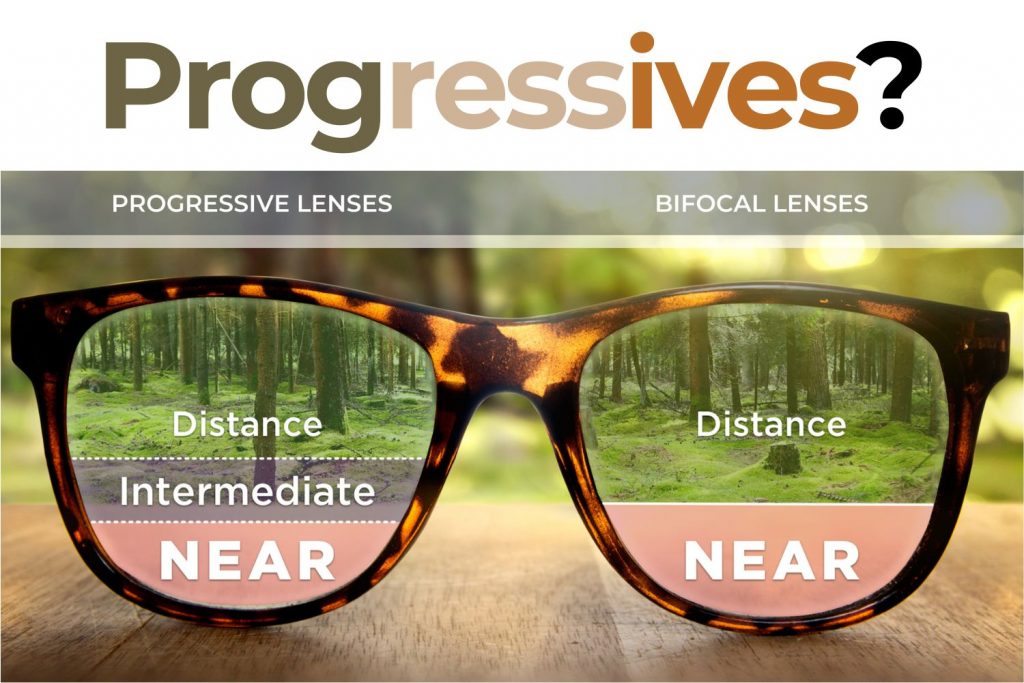
What are progressive lenses? It’s a question many contact wearers ask. Progressive lenses, also known as multifocal lenses or PALs (progressive addition lenses), are a type of lens designed to provide clear vision at multiple distances without the need for separate pairs of glasses.

PALs are primarily used to treat presbyopia, an age-related condition that affects the eye’s ability to focus on up-close objects. Progressive lenses provide a smooth and seamless transition between different prescription strengths within a single lens.

Unlike traditional bifocal or trifocal lenses, progressive lenses do not have visible lines separating the different prescription strength zones. Instead, the lenses gradually change in power from the top (distance vision) to the bottom (near vision), with intermediate powers located in between.

The lens is divided into three parts:

  1. Distance vision: the upper portion
  2. Intermediate vision: the middle portion
  3. Near vision: the lower portion

Read on to answer the question of what are progressive lenses, and to learn all about these lenses!


Continue Reading
snowflake cataracts

Snowflake Cataracts: An Exploration of the Mysterious Condition

3,395 total views, 0 today

Snowflake cataracts represent a unique and visually striking form of cataract. While cataracts are generally characterized by the clouding of the lens in the eye, snowflake cataracts stand out due to their distinctive appearance and the specific conditions under which they form.

To better understand the phenomenon of snowflake cataracts, the post explores the anatomy and physiology of the eye, the pathophysiology of cataracts in general, and the unique features, causes, diagnosis, and treatments of snowflake cataracts.

Continue Reading
dry eye

Light Therapy for Dry Eye Disease

2,736 total views, 0 today

Dry eye is a disorder of the tear film due to tear deficiency or excessive evaporation.

The most common reasons for dry eye include age, digital device use, contact lens wear, and the use of medication. The most common symptoms are itching, inconsistently blurry vision, redness, watery eyes, grittiness, burning, and eye fatigue.

A dry eye diagnosis is usually made from a patient’s dry eye symptoms, and the signs present on the front of the eye, confirmed through specific tests. Dry eye disease can be frustrating for both the patient and doctor because it’s considered chronic. The symptoms don’t always match the appearance of the eye that your eye doctor sees. It may require life-long treatment.

Continue Reading
Scroll to Top