


Eyewear was once all about utility, practicality, and simply being able to see. Today, it’s a multibillion-dollar industry built on fashion, identity, and personal expression.
But with that growth comes bigger issues. One of the most overlooked? Gender bias. And whether you realize it or not, it may be influencing what you buy.
How deep does the problem go? Let’s find out.
What is “Gendered” Fashion?
Big brands usually split their eyewear into three main categories: men’s, women’s, and children’s. That can be limiting in terms of progress, particularly when it comes to self-expression.
For instance, you might be looking for something sporty, just to realize that most of your favorite looks are only made in men’s sizes. Styles like flared jeans, once associated mainly with women, are now being embraced by men experimenting more with fashion.
The public at large seems increasingly more open to the idea that anyone can enjoy any style, but not all designers and manufacturers have kept pace with this shift. Why are brands using legacy retail categories, associating options with either men or women? Is it outdated market research, or slow-moving corporate culture?
Gender Bias in Eyewear Marketing
Some ads assume all women want elegant, delicate eyewear or that men always go for rugged, performance styles. On the contrary, some women want hardy, practical cycling shades, and many men can appreciate a bit of bling.
Most of all, people just like what they like and want the freedom to wear what speaks to them. Unfortunately, there is still gender bias in how glasses are displayed and talked about in advertising. This phenomenon might have even swayed your past buying decisions.
From product names and color palettes to model selection, gender bias shows up in subtle but persistent ways.
Ads for women’s eyewear often emphasize beauty or daintiness, with soft lighting and pastel frames paired with makeup and fashion-forward styling. Meanwhile, men’s campaigns tend to focus on strength, adventure, and performance, showcasing angular designs, darker tones, and action-heavy backdrops like mountain trails or sports arenas.
Whether you relate to this language or find yourself thinking, “Huh, that’s not me,” gender bias on the part of the advertisers is still prevalent and problematic. Who are they to say that pink sunglasses are just for women, and thick, rectangular frames are only for men?
Aspirational Marketing vs. Real Representation
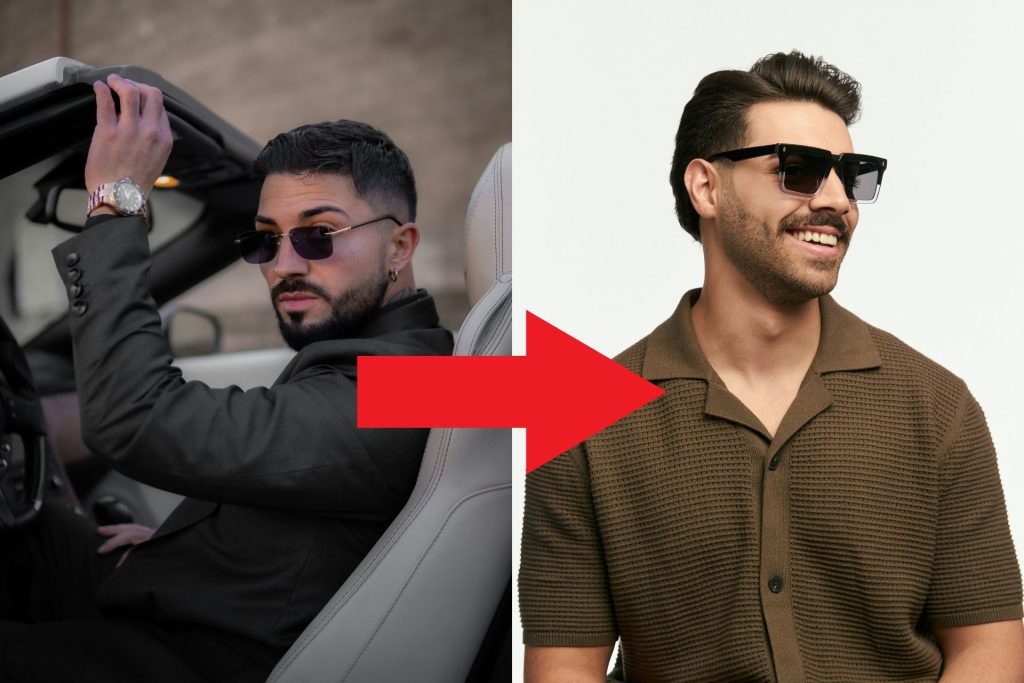
Designer eyewear ad campaigns often feature impossibly beautiful models. With their six-packs, chiseled jawlines, and flawless features, the models almost look superhuman!
This dates back to the 1950s and ’60s, the so-called Mad Men era or Golden Age of Advertising. There was a widespread belief that people sought perfection.
Sure, conventionally attractive models can make anything look good, but an increasing number of Americans today would rather see real people in their ads.
It’s no surprise brands like Goodr have taken off. Their website features regular people having a blast in their eyewear. And in a few short years, Pair Eyewear has exploded with a focus on wearable styles and ads showcasing people like you and me.
EZContacts concentrates on making authentic designer eyewear accessible to everyone, offering tools like the virtual try-on feature so customers can see how their favorite styles look on their own faces.
Hopefully, in the coming years, more labels and retailers will catch on!
Where Advertising Is Headed
Gen-Z has huge purchasing power. These young adults, roughly between 13 and 28, are changing the game. As the twenty-somethings start earning expendable cash, it’s clear they’re not about to let brands tell them what they can and can’t buy!
Many newer brands, like Korea’s Gentle Monster, emphasize stylish, fun eyewear with a focus on edginess, not gender bias. There’s a distinct “wear whatever you want” attitude. Many of the K-pop stars featured in the ads embrace a fluid, androgynous style that defies traditional gender norms.
World-renowned designers like Versace and Balenciaga are moving away from Mad Men-era advertising and bringing their brands into the present. Contemporary styles and the visuals that advertise them are designed for all ages, features, and backgrounds.
Authenticity Is Where It’s At
While gender bias in eyewear isn’t completely gone yet, one thing has become more evident: consumers gravitate toward authenticity. They are drawn to marketing that shows people like them, wearing things they like to wear and doing the things they do, without taking themselves too seriously.
And marketers are realizing they really need to appeal to audiences from all walks of life. Companies are leaning into what the average person wants: affordable luxury, unfiltered representation, and styles that reflect individuality.
The Rise of Unisex Eyewear

Inclusivity and authenticity have already worked wonders for many top brands. Take Ray-Ban, for example, a brand with hundreds of unisex offerings. Their classic aviator style has always looked great on everyone!
As companies realize that consumers can enjoy any shape or style, major brands, including Saint Laurent, Gucci, Swarovski, and Alexander McQueen, are creating more unisex styles to rival their standard men’s and women’s sections.
Is it a political statement? A nod to a particular ideology? Probably not. Odds are, companies have realized that being more inclusive increases sales.
Of course, no one actually stops men from buying women’s glasses and vice versa, but generally speaking, it’s much more comfortable to shop the unisex category.
It especially gives men more options. Women’s styles have been expressive and bold for years. But now, bigger unisex sections make it easier for men to have more fun!
TL;DR Summary
Gender bias in eyewear marketing can show up in so many ways, but things are changing:
- Eyewear categories are becoming less rigid and more inclusive.
- Real people in ads are more relatable than picture-perfect models.
- Marketing is shifting to reflect how people shop and express themselves.
- Gen-Z is leading the charge with fun and self-expressive choices.
- Gender stereotypes are gradually fading in favor of messaging centered on individuality and authenticity.
The Bottom Line: From manufacturing to marketing, more brands than ever are embracing unisex styles, and it’s paying off!

