
Tag:

Lenses

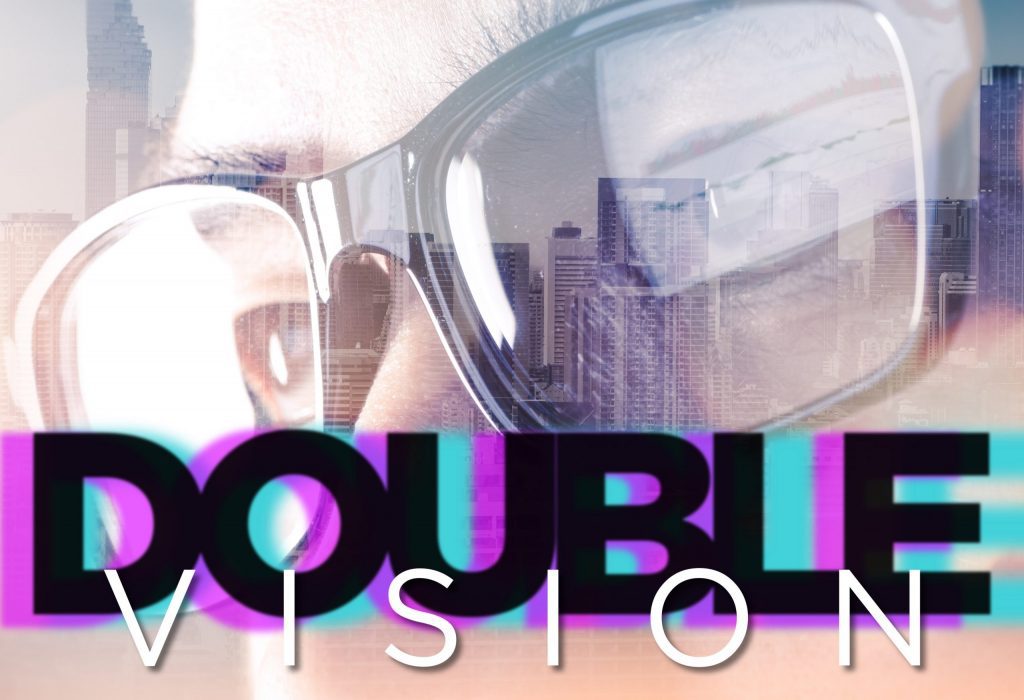
DOUBLE VISION

Prism Correction Glasses: What Are They?

7,435 total views, 0 today

Eyeglasses are typically prescribed for two main reasons: astigmatism and near- or farsightedness. Another common reason is to correct double vision, or diplopia. Read on to understand the warning signs, diagnostics, and whether or not you might be in need of prism correction glasses.

What causes the need for prism correction glasses?

If your eyes are working in accordance with each other, you have what is known as binocular vision. When light passes through the cornea, the dome-shaped tissue lining the outside of the eye helps to focus the light before it reaches the retina, the light-sensitive tissue lining the back surface of the eye.

Light that’s been converted by the cornea is sent to the brain as electrical impulses along the optic nerve to be translated into images. Typically, the eyes work together to see one, single image because light falls on the same spot in each retina.

However, in someone with diplopia, light falls on different parts of the retina, causing two separate images to be seen.

Diplopia is not the only reason for potentially needing prism correction glasses. Other causes include:


Continue Reading
progressive lenses

The Pros and Cons of Progressive Lenses

20,703 total views, 0 today

Progressive lenses are a wonderful innovation in eyewear. But they’re not for everybody. 

Progressive lenses are not bifocals (or trifocals)

Progressives give you line-free multifocal glasses.

The goal is to get a seamless progression from your lenses that deliver magnifying power for near and intermediate vision. Each lens changes gradually from point to point on the surface to provide the correct lens power for seeing clearly at various distances.

They differ from bifocals, which have only two lens powers—one for distant objects and one in the lower half of the lens—for vision correction at a specified reading distance. With bifocals, the different power zones have a clearly visible line across the center of the lens.

Progressive lenses don’t have this line. In fact, they’re sometimes called “no-line bifocals.” The truth is, progressive lenses offer a more advanced multifocal design than bifocals—or trifocals.

Continue Reading
getting contact lenses

Getting Contacts for the First Time: What to Know

4,877 total views, 0 today

Contact lenses are an amazing product of innovation. It still amazes me that something so small and delicate can bring a person’s world into focus. Contacts may seem like an obvious choice for anyone who wears glasses, but there are a few things everyone should consider first. Here’s what to know when getting contacts for the first time.

Continue Reading
Asian fit - family

What Are Asian Fit Glasses and How to Pick the Perfect Pair

13,846 total views, 0 today

You find yourself pushing your glasses back up your nose. It seems they slip down your face and rest on your cheeks. That’s not ideal. This is where Asian fit glasses come in.

One size does not fit all when it comes to glasses.

Perhaps you’re of Asian descent, as is the majority of the world’s population. If not, you could simply have facial features like Asian people often do.

“Asian individuals tend to have more of a flatter face with the cheek bones very projected compared to the typical European.”
Mark Hubbe, assistant professor of anthropology at Ohio State University

Eyewear manufacturers have responded with a solution, which they most often call “Asian fit glasses.” Other names have also surfaced to describe the solution:

  • Alternative fit
  • Low bridge fit
  • Omni fit
Continue Reading
Transitions Signature Gen8

Transitions Signature Gen 8: What’s New in Photochromic Lenses?

27,761 total views, 0 today

Transitions has been the best-selling photochromic lenses on the market for decades. The new Transitions® Signature® Gen 8 improves all the key features we’ve come to enjoy, plus there are some exciting new options.

Here’s what’s new and improved.

Faster fadeback

By far the number one complaint I get from patients regarding light adaptive lenses is the length of time it takes fully dark lenses to return to clear. Transitions VII took nearly eight minutes to return to clear. The new Gen 8 technology cuts it down by three minutes, making the fadeback time less than five minutes.

Continue Reading
Scroll to Top